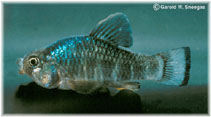
As part of our free plant scallop monitoring, I went diving in Flanders Bay, the westernmost of the Peconic Estuary system, to do quadrat counts and collect scallops for gonad index analysis - we can use this to see if and when the scallops have spawned. The counts revealed ~2 scallops per square meter - much lower than the original planting densities, but still fairly decent numbers considering the un-ideal bottom. That said, I saw a northern puffer (YAY!) in my first quadrat. This is exciting because their numbers have been severely reduced in recent years. However, puffers are potential scallop predators, so I don't know how excited I should be. However, they may also inhibit mud crab predation on scallops. Either way, it was exciting. I saw sea nettles, tons of comb jellies (ctenophores), that puffer, tons of silversides, blackfish and cunners, whelks, mud crabs, and of course scallops - oh and some red beard sponges. It was actually a pretty decent dive. Take a look at the pictures.
Thursday, July 24, 2008

Thursday, July 17, 2008
Back in action today
 photo by Steve Tettelbach
Well, I checked on my mats last week... everything looked good. I had to go back today to pick up my first set of recruitment squares. But more on that later. This week was the first "spat week" of the summer, well the first official spat week anyway. 6 weeks ago we placed out the first set of spat collectors at 24 different sites throughout the Peconics. Three weeks after that, we deployed the second set. Tuesday and Wednesday, we retrieved the first set we deployed (having soaked for 6 weeks) and dropped in set #3. The idea behind the collectors is that we place mesh bags in the water with a plastic mesh insert that larval scallops and other organisms will settle on when they are ready to come out of the water column. Of course, we are most interested in scallops, but we also monitor other things that we catch in these nets, including jingle shells, blue mussels, mortons egg cockles, and arc shells among the bivalves, and slipper shells, lacuna snails, and lunar dove snails among the gastropods. We also often get numerous mud crabs, although sometimes they get in through holes in the collector. Anyway, on Tuesday we collected over 1,000 scallop spat, which is the most we have ever collected this early in the season (this is now the 4th year of the monitoring). That means that we had an earlier spawn than normal this year, at least an earlier first spawn for scallops. Additionally, we observed a large mussel set, which is unusual, since we hadn't seen one this large either, especially considering there are no substantial mussel populations near our collectors. Either way, it was very exciting! On Wednesday, we didn't collect nearly as many, but it was still encouraging, because the collectors we checked were not near any known scallop populations or spawning sanctuaries, so the fact that we found as many as we did was very good!
So taking this good news, I went to my site today to retrieve my recruitment squares. I was not sure what to expect. My grass mats are in Hallock Bay, were we did free plant scallops last winter, but also where our spat collectors recovered very few scallop spat throughout the whole little bay (<10). sticklebacks , killifish, silversides, cunner, tautog, and sea bass, and lots of mud crabs, climbing my seagrass!!!! Very exciting day indeed, even though I didn't get any spat and lost all my pictures!
Oh, and as an aside, during a lunch break on the boat on Tuesday, we hauled up on a beach in Little Bay in Orient Beack State Park. There is a tidal pond there and I observed sheepshead minnows mating! Pretty awesome week...
Wednesday, June 25, 2008
Tuesday, June 24, 2008
New Photos and update!!!

Well, it has been a while... I have been busy finishing up the mats, finishing up writing an EPA report, moving, among other things, but I have also been in the water quite a few times since the last update... As is already says, I did win the best student poster award at the National Shellfish Association meeting... I also recently found out my first manuscript was accepted by the Marine Ecology Progress Series, which is exciting... I also finished my grass mats, and put them in the water 2 weeks ago and revisited the site today... Saw some cool things - tons of blue crabs (see the slideshow), also baby flounder, hundreds of silversides and grass shrimp (all of which were gone once i got the camera, of course)... Then we went over to the longlines hanging in Orient Harbor, NY, where they keep scallops in nets to spawn, where I tried to take some pictures, but of course they didn't come out at all... I did get some pictures of scallops out of the nets, which we sample for gonads, which is how we tell when they spawn... Anyway, things are going well right now, and I have a lot of different projects going on, so anticipate more photos for the summer... Oh, and check out my picasa web album for today here if the slideshow doesn't work out...
Monday, May 19, 2008
POSTER AWARD!!!

So, as it turns out, I recieved an award for the poster I made presenting my scallop survival poster at the National Shellfish Association's 100th Annual Meeting last month in Providence, RI entitled "A Bay Scallop's Brave New World: Can the introduced Codium fragile act as an eelgrass surrogate?"
This is very exciting. Here is the email:
"Congratulations!
Your poster presentation entitled “A bay scallop's brave new world: Can the introduced Codium fragile act as an eelgrass surrogate?” at the 100th National Shellfisheries Association meeting in Providence, Rhode Island, has been recognized with our Association's Gordon Gunter Award for Best Student Poster. As a recipient of the Gunter Award you will receive one year of free membership to the National Shellfisheries Association, which includes a subscription to the Journal of Shellfish Research. On behalf of the society we applaud your efforts.
Sincerely,
Ryan B. Carnegie
Ami E. Wilbur
Co-Chairs, Student Endowment Awards"
Your poster presentation entitled “A bay scallop's brave new world: Can the introduced Codium fragile act as an eelgrass surrogate?” at the 100th National Shellfisheries Association meeting in Providence, Rhode Island, has been recognized with our Association's Gordon Gunter Award for Best Student Poster. As a recipient of the Gunter Award you will receive one year of free membership to the National Shellfisheries Association, which includes a subscription to the Journal of Shellfish Research. On behalf of the society we applaud your efforts.
Sincerely,
Ryan B. Carnegie
Ami E. Wilbur
Co-Chairs, Student Endowment Awards"
This really made my day, and makes me excited to finish writing the report for the EPA and turning it into another manuscript.
The abstract for the poster is:
Bay scallops, Argopecten irradians, once supported a vibrant fishery on Long Island, but were pushed to the brink of local extinction after a series of brown tide blooms in the 1980’s. Restoration efforts, which commenced at the time of the fishery collapse, were somewhat successful but since 1995 scallop populations have remained well below historic levels. Despite many reasons for this lack of recovery, loss and alteration of habitat is often considered the major player. The potential role of the existing eelgrass (Zostera marina), the preferred bay scallop habitat, and macroalgae as suitable bay scallop habitat was investigated at 4 time points over 2 years. Tagged juvenile bay scallops were free planted to the bottom and tethered in 6 different habitats for a period of one week and percent recovery was calculated. Recovery numbers were highest in eelgrass, however, dense stands of Codium fragile exhibited statistically identical recovery to eelgrass. Eelgrass and codium both performed significantly better than replicate releases on bare sediment and dense drift macroalgae. These results can help managers to plan more efficient restoration efforts by locating potential habitats where scallop survival would be highest, even in the absence of eelgrass.
Thursday, April 24, 2008
Went diving this week
So, I got back in the water this week for the first time since December... And to be quite honest, it wasn't that bad... I mean I did have my new Diving Concepts drysuit, which works so well, I felt almost too hot... But it was pretty cool...
Tuesday we were in the water in Hallock Bay, a shallow body of water with a narrow inlet into Orient Harbor. This bay is the site of my grass mat deployments, but it is also the site of a free plant spawner sanctuary. Free plant means that scallops are just released to the bottom - no nets or cages here. Last November we planted about 70,000 seed scallops to the bottom in a bouyed off area, and dove on the site on Tuesday to look at overwinter mortality. The first site we looked at was almost heartbreaking - while we were still getting around 5 live scallops per square meter, we had extremely high mortality. We think this is partly attributed to the 100% macroalgae cover and the anoxic layer underneath the algae that results from such a dense assemblage. Many of the scallops were "trapped" in this layer, probably due to the late planting date, with the water too cold for the scallops to be very active and try to move up onto the canopy. However, not far away, where the cover was not as dense and had more Codium, we were finding upwards of 20 per square meter still surviving, which was very good to see. In other portions of this bay we didn't find too many seed scallops, although we found a few large, possibly year 2 adults. Hopefully we see better numbers in Hallock Bay this year with the decent overwinter survival of the free planted scallops.
Wednesday we dove mostly in Orient Harbor, first near the long lines where we have probably near 500,000 scallops hanging in lantern nets. We had decent seed recruitment there in the fall, and at various places within Orient, so we wanted to look at overwinter mortality. Some places we dove had fewer scallops than in the fall, and some places had far more scallops. All in all, we are seeing some decent returns from last fall. We have about 14 more sites to visit next week, so we will see whats going on then, but right now, things look like they are going to be ok.
On a lighter note, there was alot more activity going on in the bays then I expected. Spider crabs were out in the dozens, and it appeared to me as if many of them were mating, although I am not 100% about the mating rituals of spider crabs. Lots of whelks moving around the bottom too, as well as some drills. I also saw a very large (at least it looked large underwater) winter flounder, which was very docile. I was petting it and it barely moved. It finally swam away when I grabbed its tail. If only I had one of the larger dive bags I am confident I would have had dinner! I also saw a couple of skates, although which species I am not sure. They don't like to be touched at all, and when I tried to rub their backs they darted off. Anyway, some pretty exciting stuff, diving with my new drysuit, seeing some scallops, and seeing pretty interesting things as well. I can't wait until next week.
Tuesday we were in the water in Hallock Bay, a shallow body of water with a narrow inlet into Orient Harbor. This bay is the site of my grass mat deployments, but it is also the site of a free plant spawner sanctuary. Free plant means that scallops are just released to the bottom - no nets or cages here. Last November we planted about 70,000 seed scallops to the bottom in a bouyed off area, and dove on the site on Tuesday to look at overwinter mortality. The first site we looked at was almost heartbreaking - while we were still getting around 5 live scallops per square meter, we had extremely high mortality. We think this is partly attributed to the 100% macroalgae cover and the anoxic layer underneath the algae that results from such a dense assemblage. Many of the scallops were "trapped" in this layer, probably due to the late planting date, with the water too cold for the scallops to be very active and try to move up onto the canopy. However, not far away, where the cover was not as dense and had more Codium, we were finding upwards of 20 per square meter still surviving, which was very good to see. In other portions of this bay we didn't find too many seed scallops, although we found a few large, possibly year 2 adults. Hopefully we see better numbers in Hallock Bay this year with the decent overwinter survival of the free planted scallops.
Wednesday we dove mostly in Orient Harbor, first near the long lines where we have probably near 500,000 scallops hanging in lantern nets. We had decent seed recruitment there in the fall, and at various places within Orient, so we wanted to look at overwinter mortality. Some places we dove had fewer scallops than in the fall, and some places had far more scallops. All in all, we are seeing some decent returns from last fall. We have about 14 more sites to visit next week, so we will see whats going on then, but right now, things look like they are going to be ok.
On a lighter note, there was alot more activity going on in the bays then I expected. Spider crabs were out in the dozens, and it appeared to me as if many of them were mating, although I am not 100% about the mating rituals of spider crabs. Lots of whelks moving around the bottom too, as well as some drills. I also saw a very large (at least it looked large underwater) winter flounder, which was very docile. I was petting it and it barely moved. It finally swam away when I grabbed its tail. If only I had one of the larger dive bags I am confident I would have had dinner! I also saw a couple of skates, although which species I am not sure. They don't like to be touched at all, and when I tried to rub their backs they darted off. Anyway, some pretty exciting stuff, diving with my new drysuit, seeing some scallops, and seeing pretty interesting things as well. I can't wait until next week.
Wednesday, April 16, 2008
after meeting update
well, a few things... first, both meetings went great... the scallop session on the first day was very informative - learned that new jersey is sort of at the crossroads for the two Argopecten irradians varieties on the east coast - the southern subspecies that spawns in the fall and the northern subspecies that spawns in the summer... for years the jersey scallops exhibited similar traits to the southern scallop, but after a die-off, there were relatively few scallops... after a good set in the south shore of long island, the next summer, there was a good set in new jersey with scallops exhibiting traits to the northern variety... very interesting...
also, it seems that scallop fisheries have collapsed along the coast in the mid 1980s, although not all due to the brown tide, such as the case for new york... it is curious that the crashes have happened at similar times due to different reasons, but as of right now it is unexplained for all locations... the general consensus for lack of recovery is the low recruitment success due to low spawner densities, although i still believe it has something to do with a lack of suitable habitat and changing habitat...
but thanks to a plug during the day long scallop session, my poster was mobbed during the poster session... i literally did not get a break from the start of the poster session to the end, which is good... i even had some people approach me afterwards bc they wanted to see my poster but never got a chance to come over and talk to me about it... so it was very exciting...
as for benthics, that went well too... i saw a lot of interesting talks, including one about Codium fragile and epifauna associated with eelgrass, although it was in Canada, so not scallops... but it was interesting to see that they demonstrated higher species richness in codium versus eelgrass 0 driven in particular by more gastropods, which is interesting... they use an interesting method to sample, something i would like to learn more about... i also saw another talk about blue crabs using macroalgae as an alternate habitat in the absence of eelgrass, which was also interesting and something i think warrants some investigation up here...
oh and my talk went extremely well... i ran through it about 3-4 times during the meetings, and then once in my head right before my talk... i opened with a joke, which i think lightened my mood a bit and made me less nervous, although i could feel my right hand shaking a little bit at the beginning, they audience said they couldnt tell... as a matter of fact, many of the people i talked to said they would never have guessed that was my first talk... and it seemed like a lot of people came for my talk because a lot of people left right afterwards...
all in all it was a nice week... i got to see roger mann and richard lutz give talks... partied it up in providence, and even unexpectedly got to see toots and the maytals... it was a very good time...
also, it seems that scallop fisheries have collapsed along the coast in the mid 1980s, although not all due to the brown tide, such as the case for new york... it is curious that the crashes have happened at similar times due to different reasons, but as of right now it is unexplained for all locations... the general consensus for lack of recovery is the low recruitment success due to low spawner densities, although i still believe it has something to do with a lack of suitable habitat and changing habitat...
but thanks to a plug during the day long scallop session, my poster was mobbed during the poster session... i literally did not get a break from the start of the poster session to the end, which is good... i even had some people approach me afterwards bc they wanted to see my poster but never got a chance to come over and talk to me about it... so it was very exciting...
as for benthics, that went well too... i saw a lot of interesting talks, including one about Codium fragile and epifauna associated with eelgrass, although it was in Canada, so not scallops... but it was interesting to see that they demonstrated higher species richness in codium versus eelgrass 0 driven in particular by more gastropods, which is interesting... they use an interesting method to sample, something i would like to learn more about... i also saw another talk about blue crabs using macroalgae as an alternate habitat in the absence of eelgrass, which was also interesting and something i think warrants some investigation up here...
oh and my talk went extremely well... i ran through it about 3-4 times during the meetings, and then once in my head right before my talk... i opened with a joke, which i think lightened my mood a bit and made me less nervous, although i could feel my right hand shaking a little bit at the beginning, they audience said they couldnt tell... as a matter of fact, many of the people i talked to said they would never have guessed that was my first talk... and it seemed like a lot of people came for my talk because a lot of people left right afterwards...
all in all it was a nice week... i got to see roger mann and richard lutz give talks... partied it up in providence, and even unexpectedly got to see toots and the maytals... it was a very good time...
Subscribe to:
Posts (Atom)