Zostera marina is a seagrass species, commonly known as eelgrass, that is found on both coasts of the United States, as well as in Europe. Unfortunately, Zostera is disappearing all over the place, including right here in New York. This could have devastating impacts on animals that rely on eelgrass as foraging grounds, or, as is the case with scallops, use it as a refuge from predation. This is its story, as seen through the eyes of an aspiring graduate student...

Friday, August 22, 2008

Long scallop week


Well, this week was a big week of sampling for me...
Not only was my first field sampling for the scallop growth experiment in the grass mats, I also planned to use this week as a scallop predation experiment week... The scallops for growth were measured two weeks ago, transported to the site, placed into white spat bags, and set at locations in my artificial seagrass array...
I was pretty excited going forward with the growth experiment because it worked out so well last year, and I almost doubled the number of scallops this year that I used last year... So you could expect why I was looking forward to this week, T-2 weeks, to see how my scallops were doing...
DISAPPOINTMENT!!! I would have to say using back of the envelop calculations, approximately 30% of my scallops did not survive to this sampling period! This was particularly shocking to me, since I only lost about 10% of the scallops I used last summer during the entire 12 week growth experiment... Of course, I was bummed... We measured the dead ones anyway, hoping that after I come up with a growth rate at the end of the experiment, I could approximate when they might have died... However, quickly looking at the numbers indicated to me that most of them probably died the day they were put out in the field... I suspect this is more likely the case, and I blame myself for this... There were probably some issues in transporting the juveniles from the hatchery facility to the field site, and then the time it took to get all of them into bags and situated onto their respective sites, they were probably out of water too long... This wasn't such a problem last year, but again, with almost twice as many scallops to place out in the field, almost twice the amount of time is needed to actually put them all out... So, suffice it to say I will be putting out some more scallops the next sampling to make up for the loss...

The second experiment worked out much better this time... Last year I tried this same predation experiment with no success - problems recovering tethers, loss of scallops during transport, tether tangling, screwy and missing data points... So I tinkered with and refined my methods for this year, and WOW!!!
Things worked out so much better this time around... Predation was as expected and I actually pseudo-observed a scallop being preyed upon...

After putting out all my tethers on Tuesday, 8/19, I went back with my camera to get some pictures, and when I went to the unvegetated tethers, I noticed a fishing line going into a half clam shell... I thought it was weird that the scallop would swim into there and byss, so I tried to pull the line, but it wouldn't budge... Upon further inspection, I saw a mud crab under the shell with the scallop shell, now in two halves... I tried to get a picture...
Anyway, this was exciting that it happened so quickly (if I had to guess, I would say within an hour and a half after release)... And I am very pleased with my results this time around... There are still some bugs to work out, namely preventing scallop tethers from tangling with each other during transport, but I look forward to running this experiment again in the fall...


Additionally exciting is that I observed adult scallops in or near my mats again this time!!!
And, a fellow diver, Andrew, observed some small scallop spat (probably in the 7-10mm range) on my mats, and if you remember from previous posts, I have been very disappointed for the lack of scallop recruits to my mats, so this was very good and welcoming news, and so this means that my recruitment experiment is starting to look up!!!
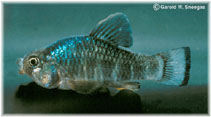
I also saw many fish again this time - including weakfish (probably about the size of the one in the photo from the web) for the first time, juveniles of course, and the usual suspects of pipefish, sticklebacks, tautog and cunner, and possibly a black sea bass, but visibility wasn't great and whatever it was swam away very quickly... Oh, and I saw this big spider crab who tried to get me!!!

By the by, check out Chris Pickerell of Seagrass.LI's blog here... He's got some pretty exciting stories going on, including pregnant seahorses, and horny (read:territorial) male sea robins...

Oh and stay tuned for slide shows from this week...

Tuesday, August 5, 2008

No photos, only disappointment

Well, I went to remove the second set of my recruitment squares on Monday with hopes for better results than last time. Well, unfortunately, there was no scallop spat again on my mats. NONE!!! This is becoming a little disappointing. I understand that finding spat on grass is like finding a needle in a hay stack. But I should see something, anything. out of 72 squares, 360 shoots, and only 1 Crepidula fornicata and 1 mud crab. WHAT? In my "control" spat collectors, similar to the ones we use for the monitoring efforts, I didn't get any scallop spat either, and didn't get anything else other than mud crabs!!! This is not good. Whats worse, we had another round of the spat collectors and not a single scallop spat in any of the collectors placed in Hallock Bay, and when we monitored our free planting site from last winter, we only found 5 scallops in 24 square meters. I am worried that I won't get any spat on my mats at all, and this means I might have to find a new location to look at recruitment. On a better note, I did place out 680 scallops for monitoring growth on bare sand, at the patch edge and in the patch center. That should go better, at least I hope.

Wednesday, July 30, 2008

Marking scallops


Well, I finally got my bee tags from the Bee Works. It took a while to get, bc they were out of stock when I ordered them and were accidentally shipped to the wrong place (Southampton instead of Cutchogue, but I got it figured out). Anyway, I got them, and so I glued them onto my scallops yesterday. I will measure the scallops on Sunday and they will get deployed to my mats on Monday. At the same time, I will also be removing set 2 of my recruitment squares and putting out set 4. I will keep you posted about that, but I wanted to throw these pictures of the marking process up here. Enjoy!

Thursday, July 24, 2008

Diving in Flanders

As part of our free plant scallop monitoring, I went diving in Flanders Bay, the westernmost of the Peconic Estuary system, to do quadrat counts and collect scallops for gonad index analysis - we can use this to see if and when the scallops have spawned. The counts revealed ~2 scallops per square meter - much lower than the original planting densities, but still fairly decent numbers considering the un-ideal bottom. That said, I saw a northern puffer (YAY!) in my first quadrat. This is exciting because their numbers have been severely reduced in recent years. However, puffers are potential scallop predators, so I don't know how excited I should be. However, they may also inhibit mud crab predation on scallops. Either way, it was exciting. I saw sea nettles, tons of comb jellies (ctenophores), that puffer, tons of silversides, blackfish and cunners, whelks, mud crabs, and of course scallops - oh and some red beard sponges. It was actually a pretty decent dive. Take a look at the pictures.

Thursday, July 17, 2008

Back in action today

photo by Steve Tettelbach


Well, I checked on my mats last week... everything looked good. I had to go back today to pick up my first set of recruitment squares. But more on that later. This week was the first "spat week" of the summer, well the first official spat week anyway. 6 weeks ago we placed out the first set of spat collectors at 24 different sites throughout the Peconics. Three weeks after that, we deployed the second set. Tuesday and Wednesday, we retrieved the first set we deployed (having soaked for 6 weeks) and dropped in set #3. The idea behind the collectors is that we place mesh bags in the water with a plastic mesh insert that larval scallops and other organisms will settle on when they are ready to come out of the water column. Of course, we are most interested in scallops, but we also monitor other things that we catch in these nets, including jingle shells, blue mussels, mortons egg cockles, and arc shells among the bivalves, and slipper shells, lacuna snails, and lunar dove snails among the gastropods. We also often get numerous mud crabs, although sometimes they get in through holes in the collector. Anyway, on Tuesday we collected over 1,000 scallop spat, which is the most we have ever collected this early in the season (this is now the 4th year of the monitoring). That means that we had an earlier spawn than normal this year, at least an earlier first spawn for scallops. Additionally, we observed a large mussel set, which is unusual, since we hadn't seen one this large either, especially considering there are no substantial mussel populations near our collectors. Either way, it was very exciting! On Wednesday, we didn't collect nearly as many, but it was still encouraging, because the collectors we checked were not near any known scallop populations or spawning sanctuaries, so the fact that we found as many as we did was very good!


So taking this good news, I went to my site today to retrieve my recruitment squares. I was not sure what to expect. My grass mats are in Hallock Bay, were we did free plant scallops last winter, but also where our spat collectors recovered very few scallop spat throughout the whole little bay (<10). sticklebacks , killifish, silversides, cunner, tautog, and sea bass, and lots of mud crabs, climbing my seagrass!!!! Very exciting day indeed, even though I didn't get any spat and lost all my pictures!


Oh, and as an aside, during a lunch break on the boat on Tuesday, we hauled up on a beach in Little Bay in Orient Beack State Park. There is a tidal pond there and I observed sheepshead minnows mating! Pretty awesome week...

Wednesday, June 25, 2008

Tuesday, June 24, 2008

New Photos and update!!!


Well, it has been a while... I have been busy finishing up the mats, finishing up writing an EPA report, moving, among other things, but I have also been in the water quite a few times since the last update... As is already says, I did win the best student poster award at the National Shellfish Association meeting... I also recently found out my first manuscript was accepted by the Marine Ecology Progress Series, which is exciting... I also finished my grass mats, and put them in the water 2 weeks ago and revisited the site today... Saw some cool things - tons of blue crabs (see the slideshow), also baby flounder, hundreds of silversides and grass shrimp (all of which were gone once i got the camera, of course)... Then we went over to the longlines hanging in Orient Harbor, NY, where they keep scallops in nets to spawn, where I tried to take some pictures, but of course they didn't come out at all... I did get some pictures of scallops out of the nets, which we sample for gonads, which is how we tell when they spawn... Anyway, things are going well right now, and I have a lot of different projects going on, so anticipate more photos for the summer... Oh, and check out my picasa web album for today here if the slideshow doesn't work out...